
Loop Patterns
Home / Loop Patterns
Loop Patterns
FIBC loop patterns
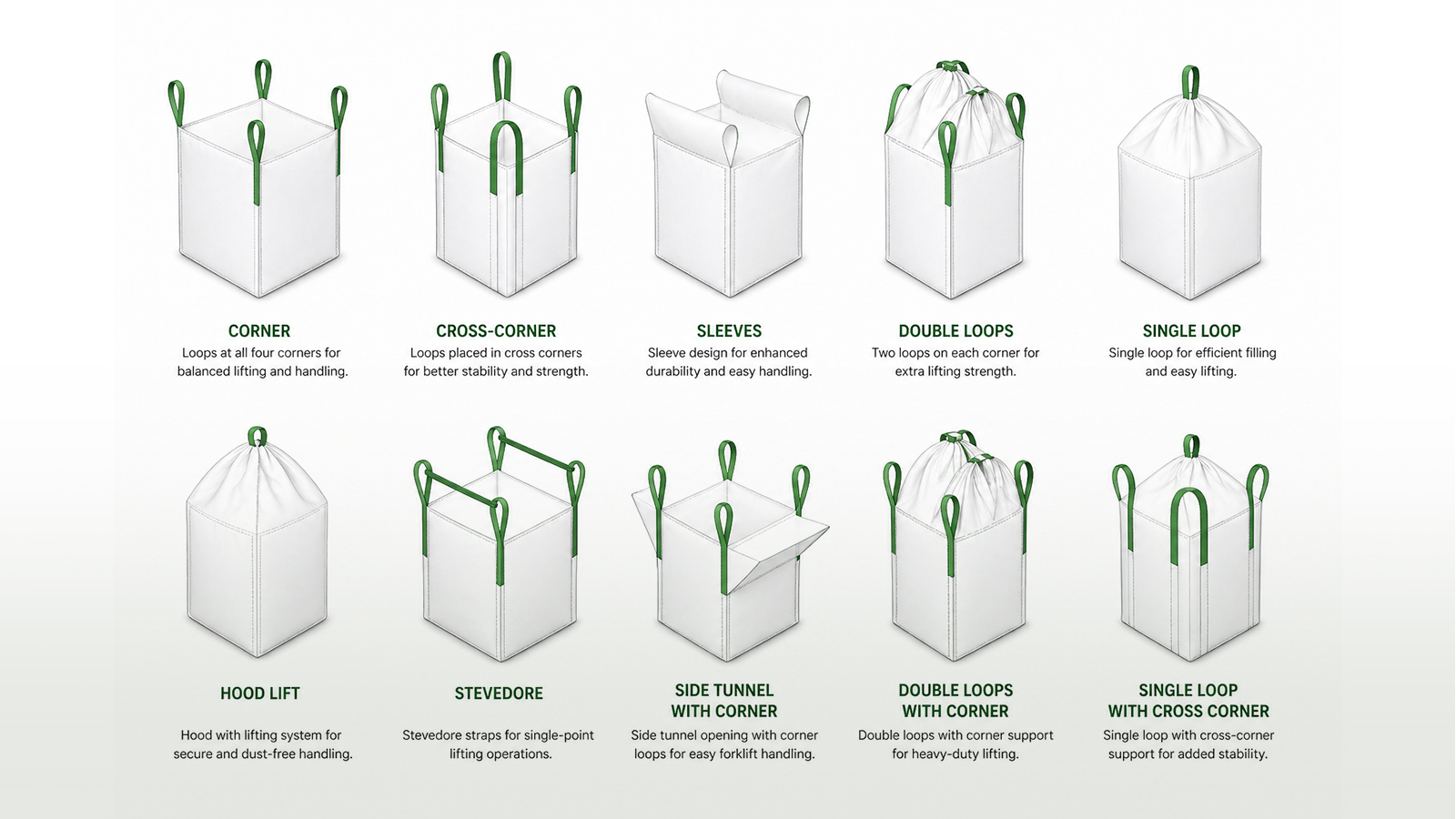
They are critical design elements that determine how a bulk bag is lifted, handled, and transported during filling, storage, and discharge. The loop configuration influences stability, safety, operational efficiency, and compatibility with forklifts, cranes, and automated handling systems. Selecting the right loop pattern depends on material type, bag capacity, handling method, and logistical requirements. Well-engineered loop designs not only improve ease of movement but also reduce stress on the bag structure, preventing tearing, deformation, or failure under load.
Common loop patterns include corner loops, cross-corner loops, tunnel loops, and single or two-loop designs, each serving specific operational needs. Corner loops provide balanced lifting for standard forklift or crane handling, while cross-corner loops offer improved stability for uneven loads. Tunnel loops are ideal for single-operator forklift handling, as they allow the forks to pass directly through the bag without engaging individual loops. Single or two-loop bags are cost-effective solutions for lightweight or single-use applications where simple lifting is sufficient.
By choosing the appropriate loop pattern, industries can enhance workplace safety, speed up loading and unloading processes, and optimize storage and transportation efficiency. Proper loop selection also ensures better palletization, reduced product damage, and smoother supply chain operations across sectors such as agriculture, chemicals, construction, food processing, and logistics.