
We are very pleased to continue sharing some important news with our business partners on a regular basis.
It's part of our strategy to maintain the value chain of DULARI , to remain positioned as synonymous with quality and service accompanying them in ensuring industrial safety.
We've covered a significant amount of technical tips and best practices for using packaging throughout our editions!
UV protection in FIBC!
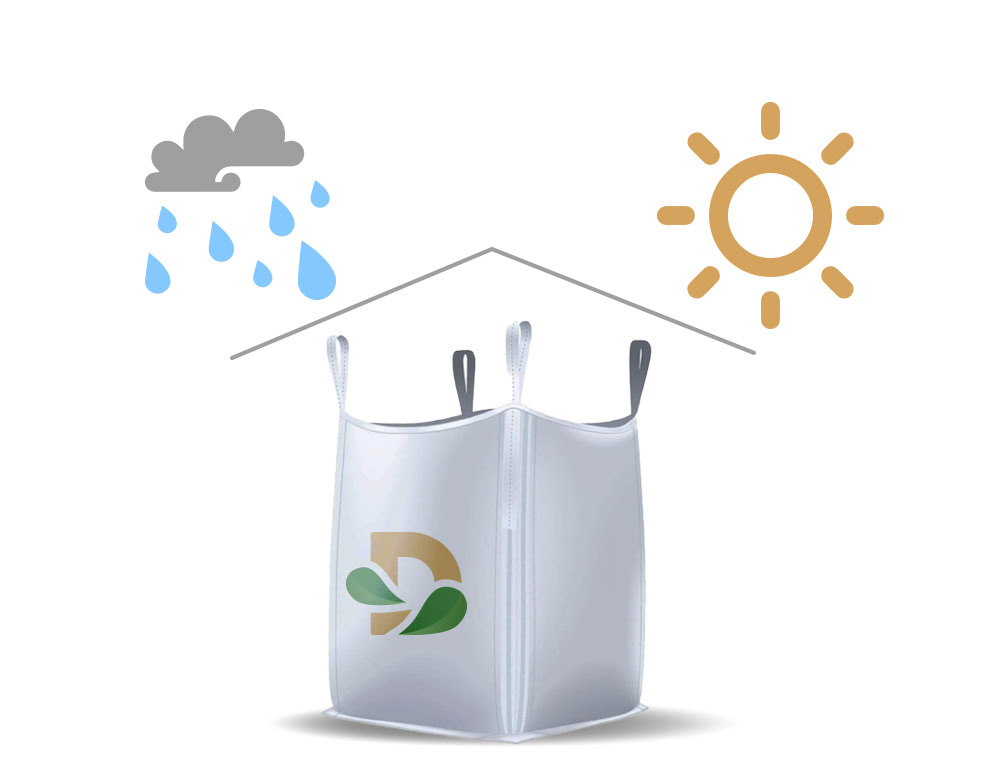
It is very important to consider the effects of ultraviolet radiation on polypropylene to prevent damage to the packaging. The storage location for big bags should be carefully planned to avoid exposure to UV rays.
Currently, the polypropylene fabrics used to manufacture big bags have an anti-UV additive that provides extended protection against the harmful effects of radiation. These fabrics are designed to retain 50% of their tensile strength after 200 hours of exposure. Fabrics without UV protection degrade rapidly.
The type and amount of additive will vary from one manufacturer to another, therefore fabrics may behave differently depending also on the region, climate and environmental conditions.
The most common damage suffered by PP fabrics as a result of UV radiation is a reduction in impact resistance, tensile strength and elongation.
Big bags should always be stored in a protected environment, even with UV protection. We recommend that users do not store FIBCs outdoors or in areas subject to high temperatures or prolonged exposure to UV radiation or environmental elements.
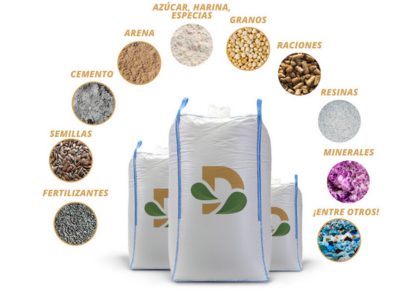
Many products and raw materials can be packaged and transported!
Polypropylene packaging
In times when ecology matters more than ever, the answer to this important question is YES. PP is 100% recyclable, whether in the form of industrial scrap or post-consumer waste. The raw material (polypropylene) can be mechanically processed without changing its chemical structure. The new material obtained through recycling can be used in various applications. It should be noted that polypropylene fabrics that have been used in contact with hazardous materials should not be recycled.
To date, there is no data or studies that determine the useful life of FIBCs.
Each manufacturer can give their recommendation based on experience and variables such as the UV inhibitor used, big bag construction, ambient temperature and storage method, but the best way to determine if the FIBC is still in condition for use is to perform performance tests (lifting, etc.) and compare the results with the initial tests of the same batch.